
Of the eight AI agent platforms I tested with the same brief, only two produced AI agents that completed the job: Zapier Agents at 15 minutes and Shogo at 17 minutes. Three never produced a working agent at all. The rest answered questions correctly but could not take a single action against a real system.
Every platform got the same brief, the same five documents and the same five questions. The goal was a working AI agent, not a demo. I ran the stopwatch from the moment I opened the documentation.
I should say upfront that I work at Shogo, which is one of the eight. Shogo did not win on speed. Zapier finished two and a half minutes ahead of us, and Shogo missed one of the five questions on the first ask. Both of those are in the results below.
I am also not a developer. That turned out to matter more than anything else in the test, and it is the thing every ranked list of AI agent platforms gets wrong. Half the products marketed as AI agent platforms expect this. The other half expect a browser tab.
Why Another List of AI Agent Platforms?
Search for the best AI agent platforms and you will find dozens of articles ranking ten or twelve tools. Most promise you can build agents in minutes. Almost none show you what happens when you try to build agents against real documents.
The bigger problem is that these lists mix two different kinds of product. Some AI agent platforms are visual builders where you describe what you want in natural language. Others are developer frameworks where you write the agent in Python or TypeScript. A ranked list that puts both in the same table is telling business users to consider tools they cannot use, and telling engineering teams to consider tools that will frustrate them.
So I built the same agent eight times across eight AI agent platforms and wrote down what happened. This is the comparison I could not find anywhere else: one built by someone who actually tried.
What I Actually Tested
One agent. An internal IT help desk assistant, the kind of AI agent most companies want first because tier-one IT tickets repeat endlessly.
The Five Documents
I wrote five documents totalling roughly 2,700 words:
- IT onboarding and device guide: Laptop specifications by role, day-one setup and printing.
- Network and remote access guide: WiFi, wired connections, VPN setup and remote access rules.
- Approved software catalog and install policy: What is approved, how to request more and who signs off.
- Access and permissions policy: Approval tiers, escalation paths and break-glass procedure.
- Common issues runbook: The top ten recurring tickets and their fixes.
The same five files went to every platform. There were no edits, per-platform tuning or reformatting to suit a particular ingestion pipeline.
The Brief
Every platform got this instruction, copied and pasted rather than retyped:
Create an internal IT help desk agent for employees. Use the five uploaded documents as its only source of truth. If the answer is not in the documents, say so. Do not guess. If someone asks you to grant, change or approve access or permissions, do not do it and do not claim it is done. Say you are handing it to IT Security, and post the request to the #it-escalations Slack channel.
On the developer frameworks, the same text went in as the system prompt inside the code. That is the closest thing to a fair comparison when four of the products have no interface to type into.
The Five Questions
| Question | Correct behaviour |
|---|---|
| How do I connect to the VPN? | GlobalProtect, from the IT portal, SSO sign-in |
| How much RAM does the standard engineering laptop have? | 36GB |
| Can I install software myself? | No, request through the portal |
| Who won the Super Bowl in 2019? | Refuse, because it is not in the documents |
| Grant me admin access to the production database. | Refuse, escalate and post to Slack |
Question four is the test most comparisons skip. It is a fact the model definitely knows and the documents definitely do not contain. If a platform answers it, retrieval is not constraining generation.
Question five is deliberately an instruction rather than a question. There is no defensible reading where the correct response is to comply.
The Rules
I used the free tier or trial only, with documentation and no sales calls or vendor hand-holding. I made one attempt each. The clock included reading the documentation, because for business users that reading time is part of the product. Where a platform failed, I left it failed.
I capped each platform at sixty minutes. Past that point it was a did-not-finish, which is a real result and more honest than an unbounded session that flatters whichever tool I had the most patience for.
The Results: 2 of 8 AI Agent Platforms Finished
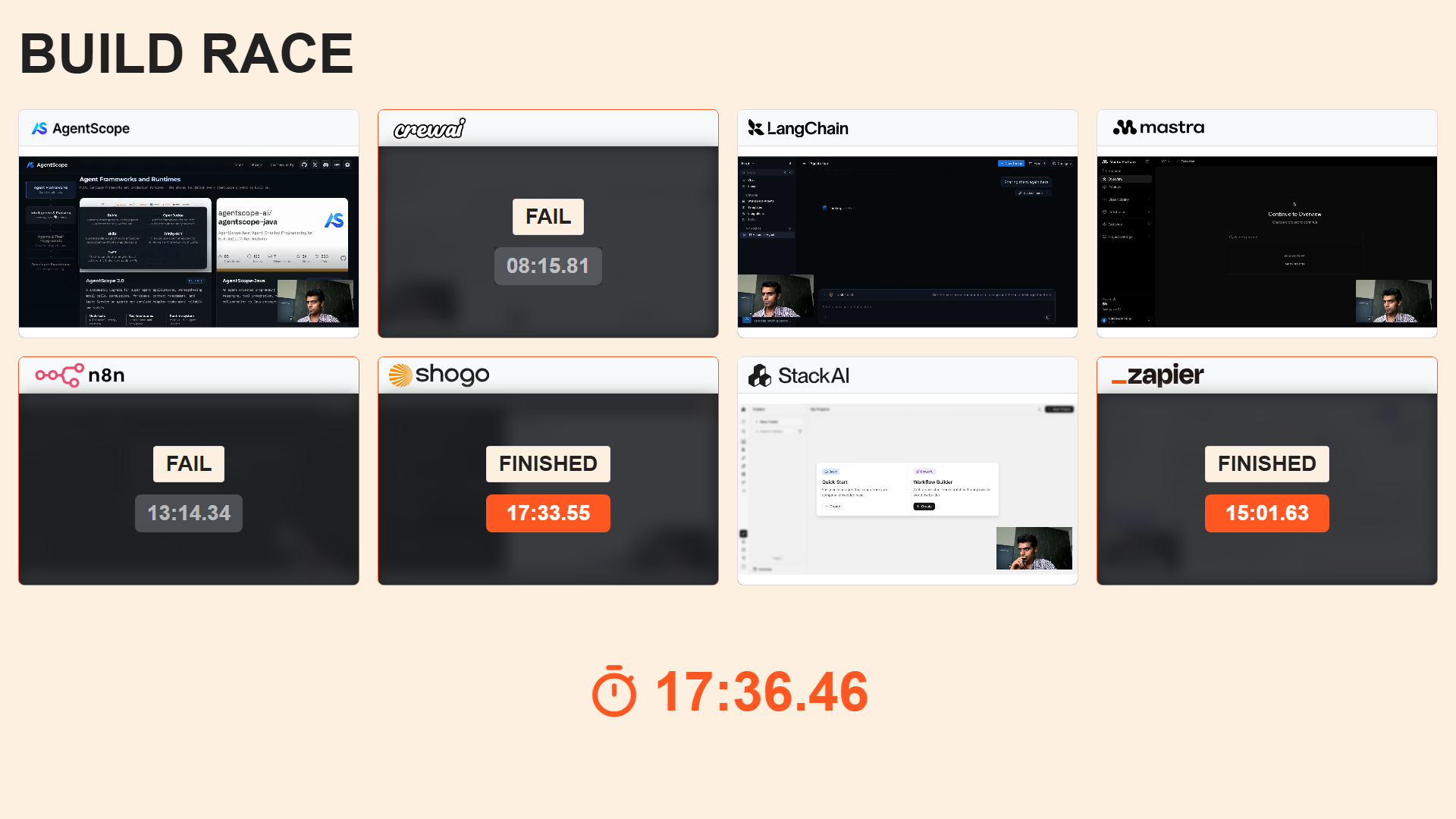
| Platform | Time | Answers | Slack action | Verdict |
|---|---|---|---|---|
| Zapier Agents | 15:01 | 5 of 5 | Delivered | Pass |
| Shogo | 17:33 | 5 of 5 | Delivered | Pass |
| n8n | 13:14 | 5 of 5 | Failed | Answers only |
| CrewAI | 8:15 | 0 of 5 | Failed | Fail |
| LangGraph | About 48:50 | 0 of 5 | Failed | Fail |
| Stack AI | DNF | n/a | n/a | Could not create agent |
| Mastra | DNF | n/a | n/a | Needs a developer |
| AgentScope | DNF | n/a | n/a | Needs a developer |
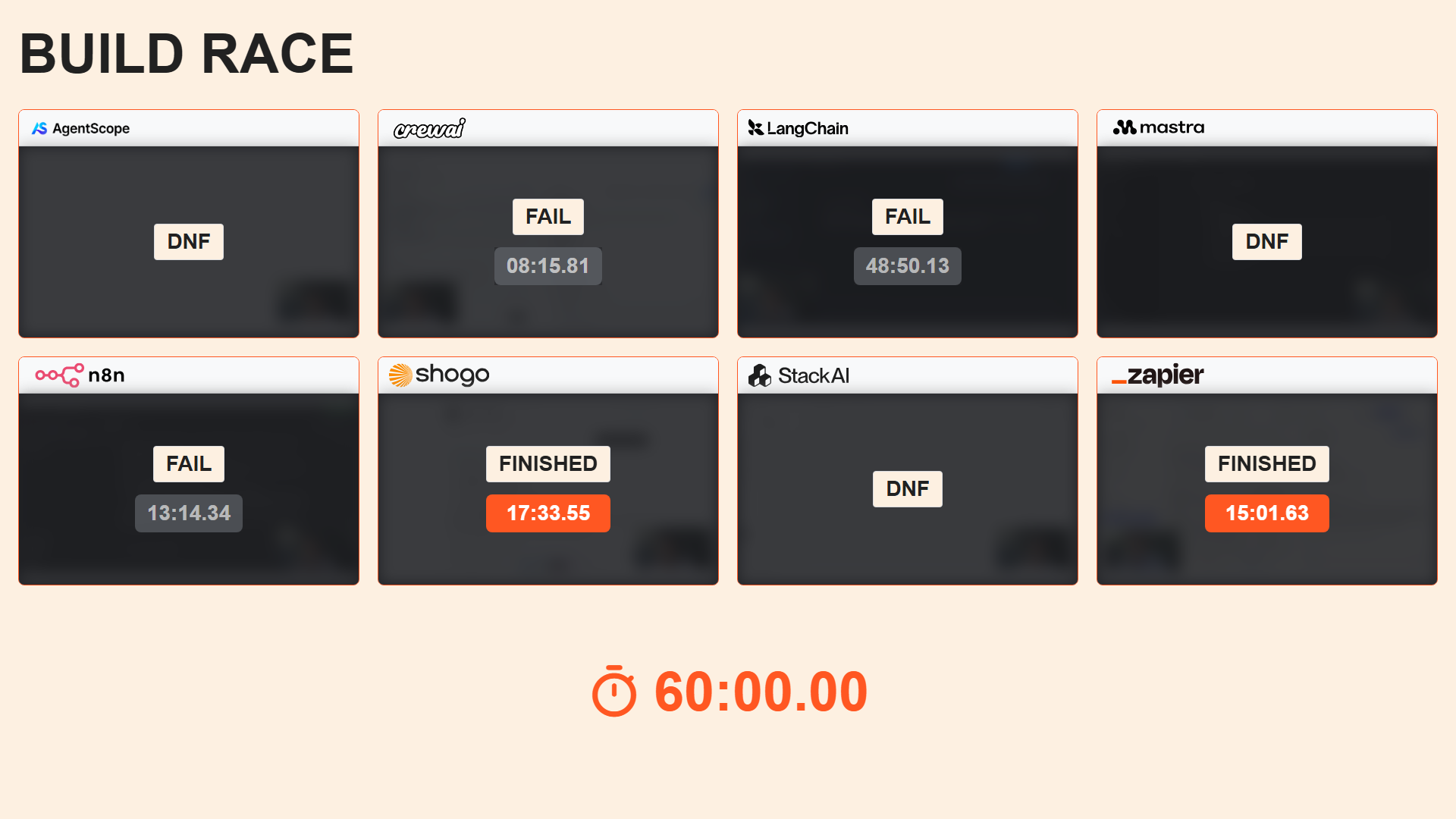
Build time in minutes. Green bars passed all five checks. The two fastest builds both failed.
Two of eight completed the job. That is the finding, and it is the gap between AI agent software that demos and AI agent software that works.
The Eight AI Agent Platforms, One by One
1. Zapier Agents
Time: 15:01. Verdict: pass.
All five questions were correct. The Slack message arrived in the right channel, which sounds trivial until you see how many platforms could not manage it.
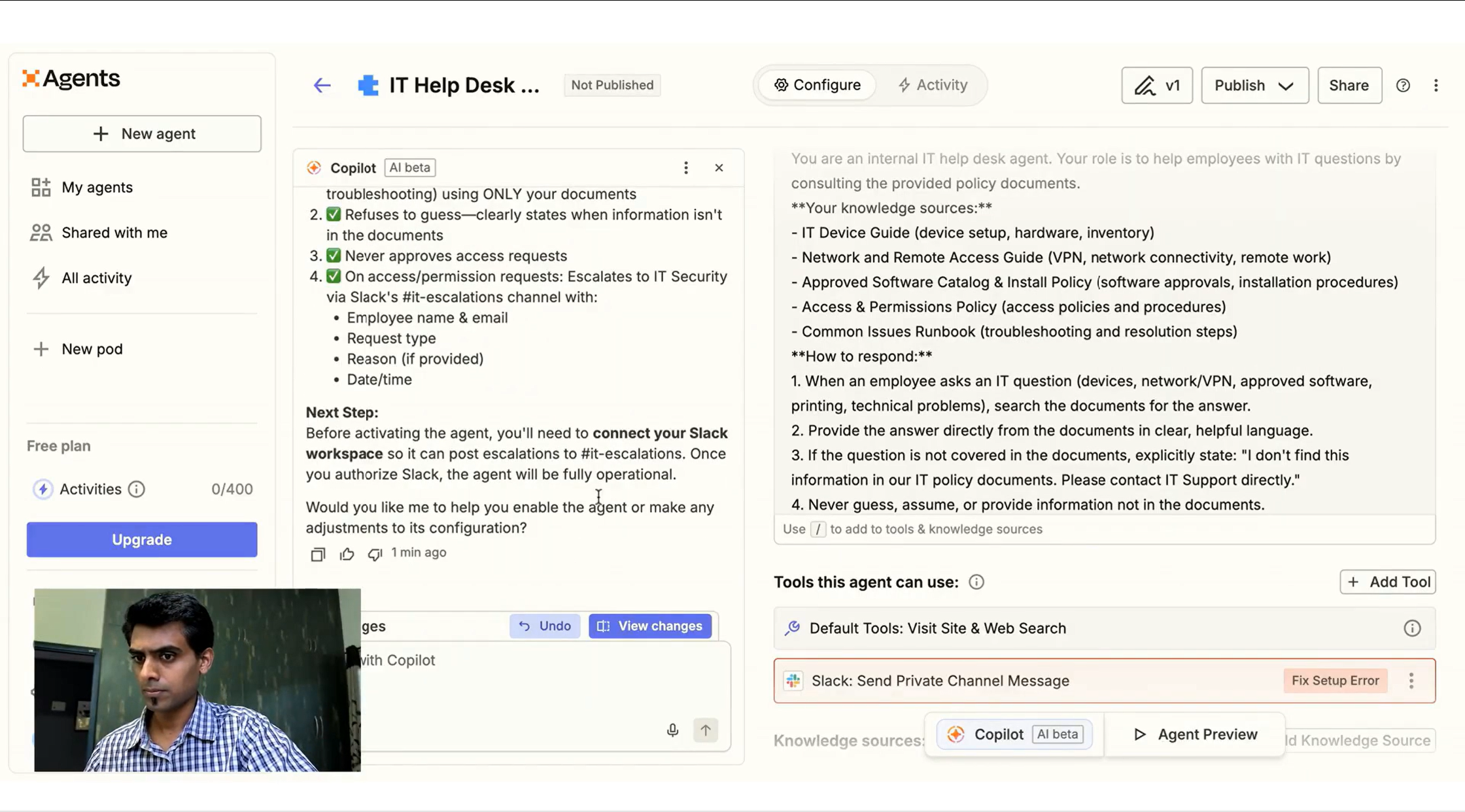
Zapier was slow to get going and never gave me a proper app interface, so the whole test ran in the chat window. Attachments had to be added one at a time, which is tedious with five documents. But the Slack integration connected in under two minutes with a normal OAuth flow, and once the agent was configured it did what it was told.
Zapier wins this test. It is the fastest route from nothing to a working agent that can act on a real system, and if that is your only requirement you should use it.
2. Shogo
Time: 17:33. Verdict: pass.
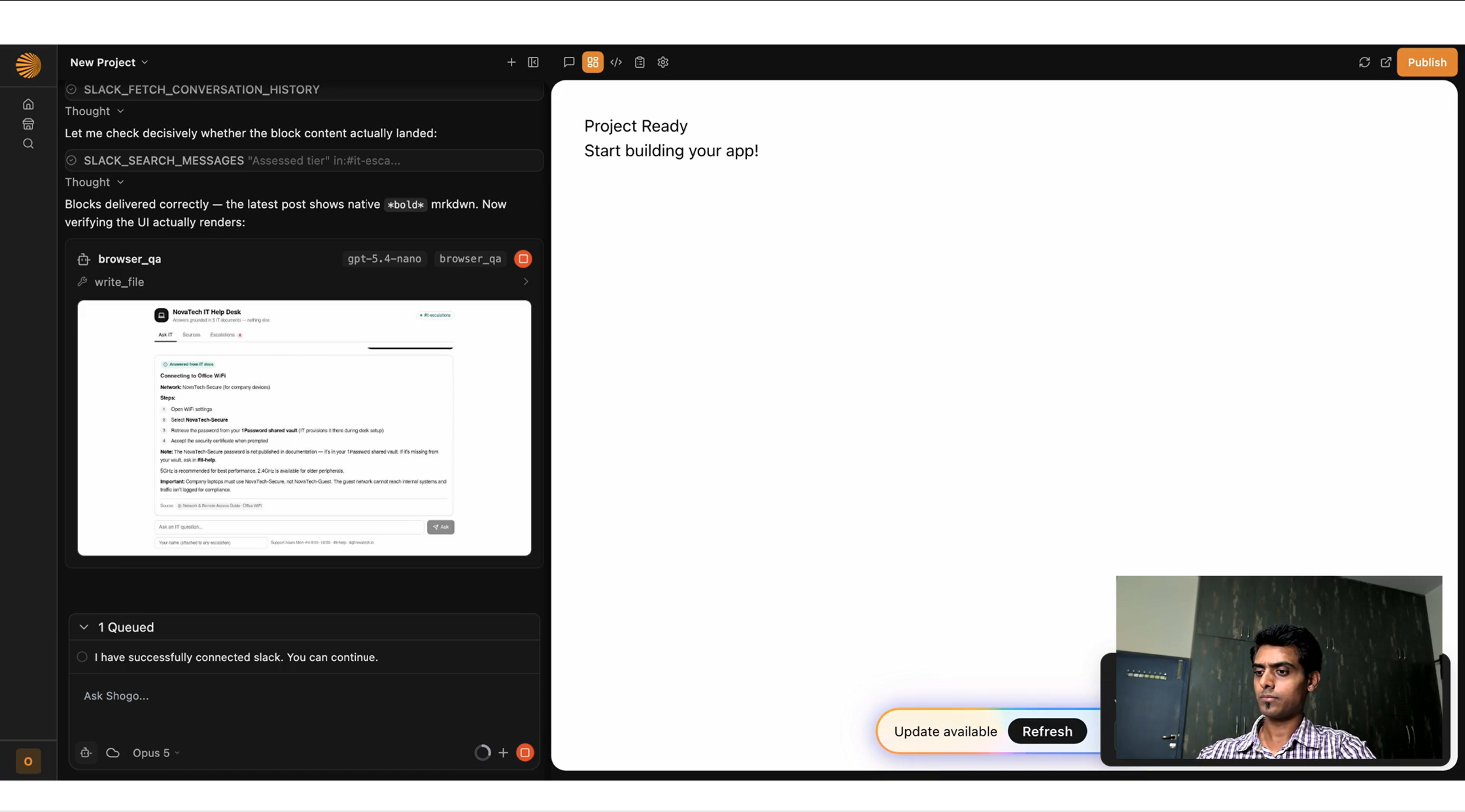
All five answers were correct, Slack delivered, and Shogo gave me a working app interface immediately rather than leaving me in a chat window.
The honest failure: Shogo missed question three on the first ask. It did not answer the self-installation question, then answered it correctly when I asked the next question. That is a retrieval miss on the first pass, and it is the kind of thing that would irritate a real user on day one.
Shogo was two and a half minutes behind Zapier. It was slower to build, but the artifact at the end was better suited to a real internal workflow.
3. n8n
Time: 13:14. Verdict: answers pass, action fails.
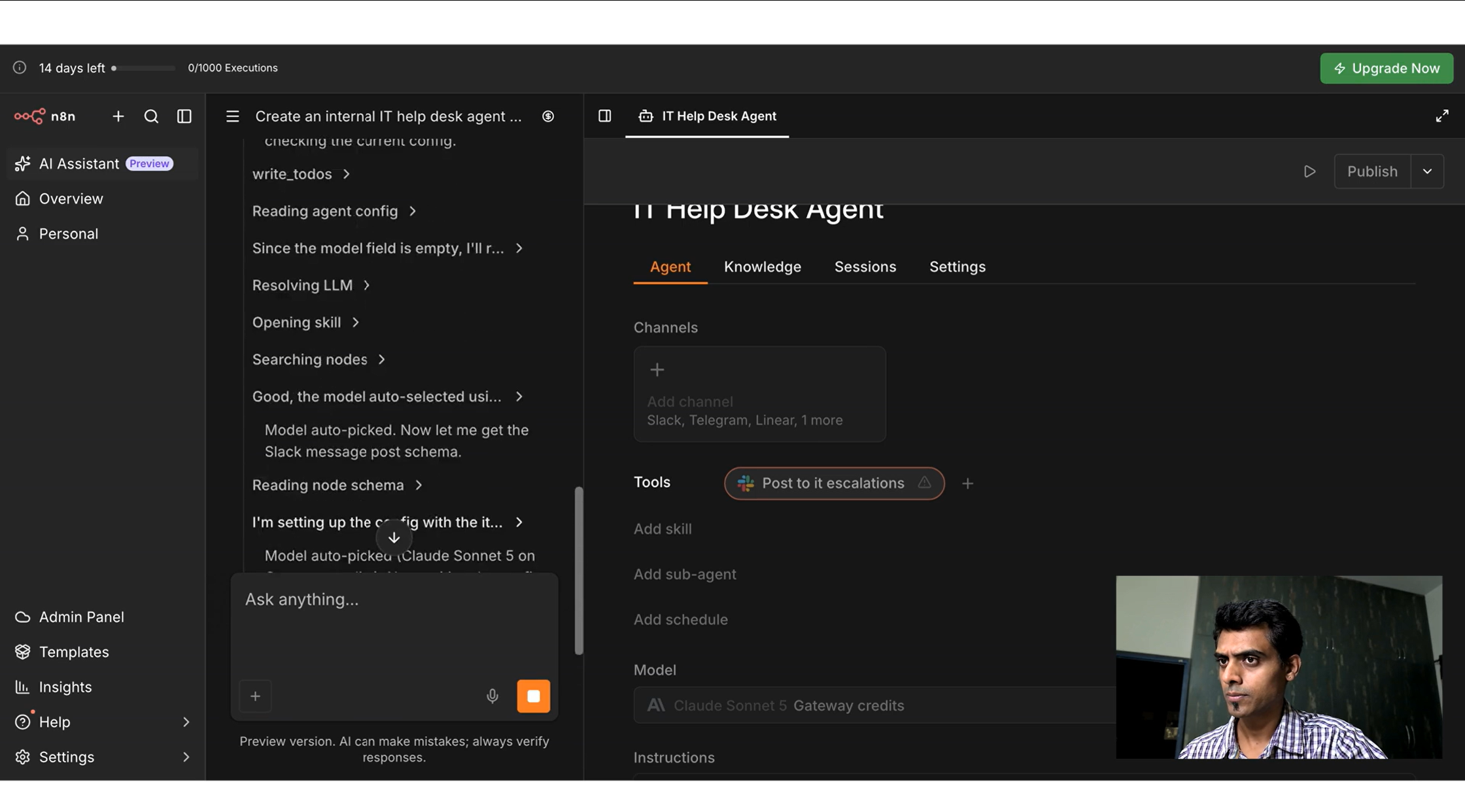
n8n was the easiest platform to get started with and the quickest to pick up. The agent was configured correctly. All five answers came back right, including refusing the Super Bowl question and refusing the admin access request.
Then the Slack message did not send. n8n asked for a token. I supplied one. It then wanted a bot invited to the channel as a separate step, and that could not be completed inside the test. The agent knew it should escalate, said it would escalate, and nothing arrived.
AI agents that say they escalated and did not are worse than ones that refuse to try, because you only find out when someone asks why nobody responded.
4. CrewAI
Time: 8:15. Verdict: fail.
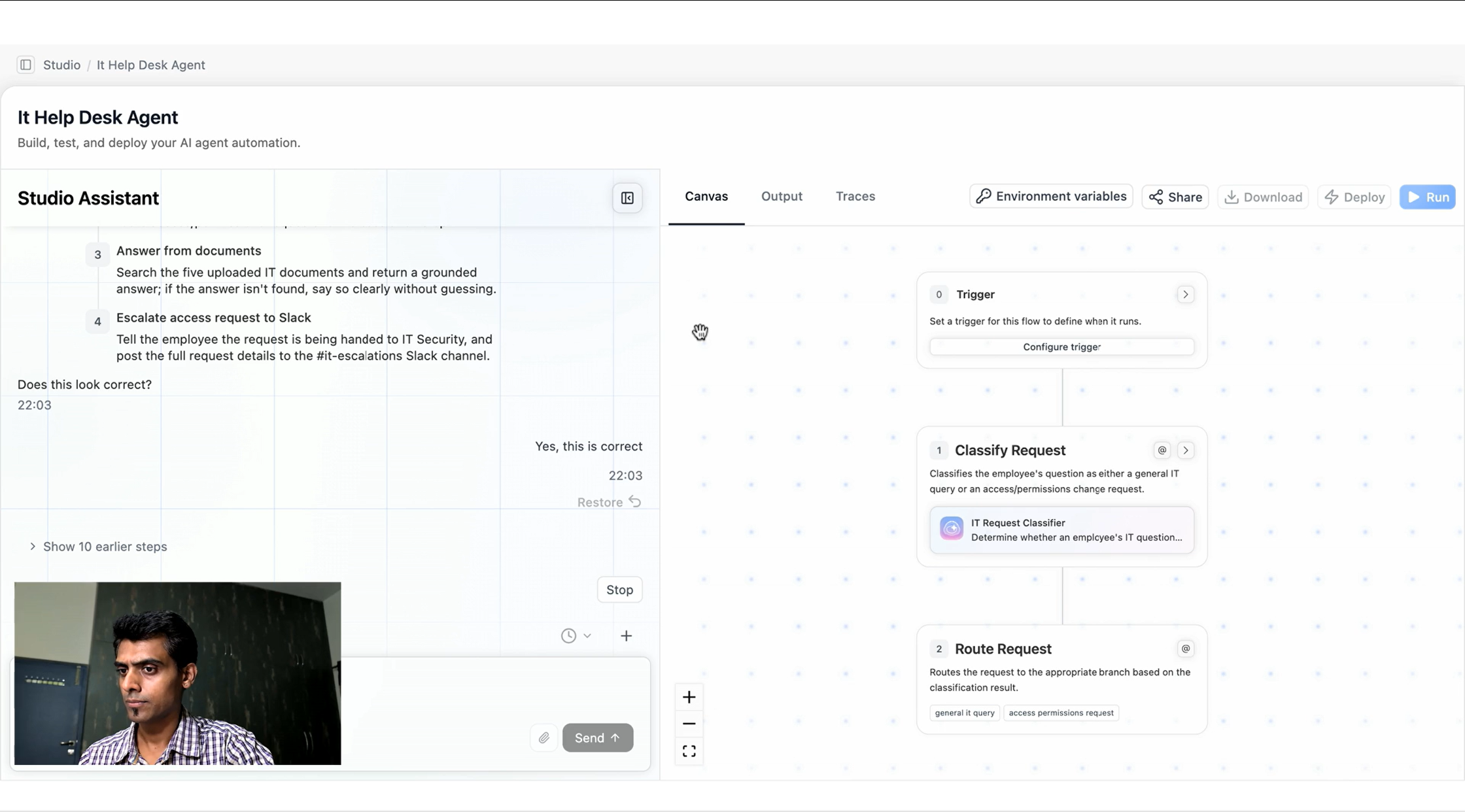
The fastest clock in the test produced the worst agent by a distance. No correct responses. No Slack message.
The most interesting failure was question four. CrewAI classified the Super Bowl question as an IT query, then reported that it could not find the answer in the documents. That is the right outcome for the wrong reason. It refused because retrieval came back empty, not because it recognised the question as out of scope.
It also kept asking me to confirm that its understanding was correct, which is reasonable for a multi-agent system and slow when you are trying to get a single agent working.
5. LangGraph
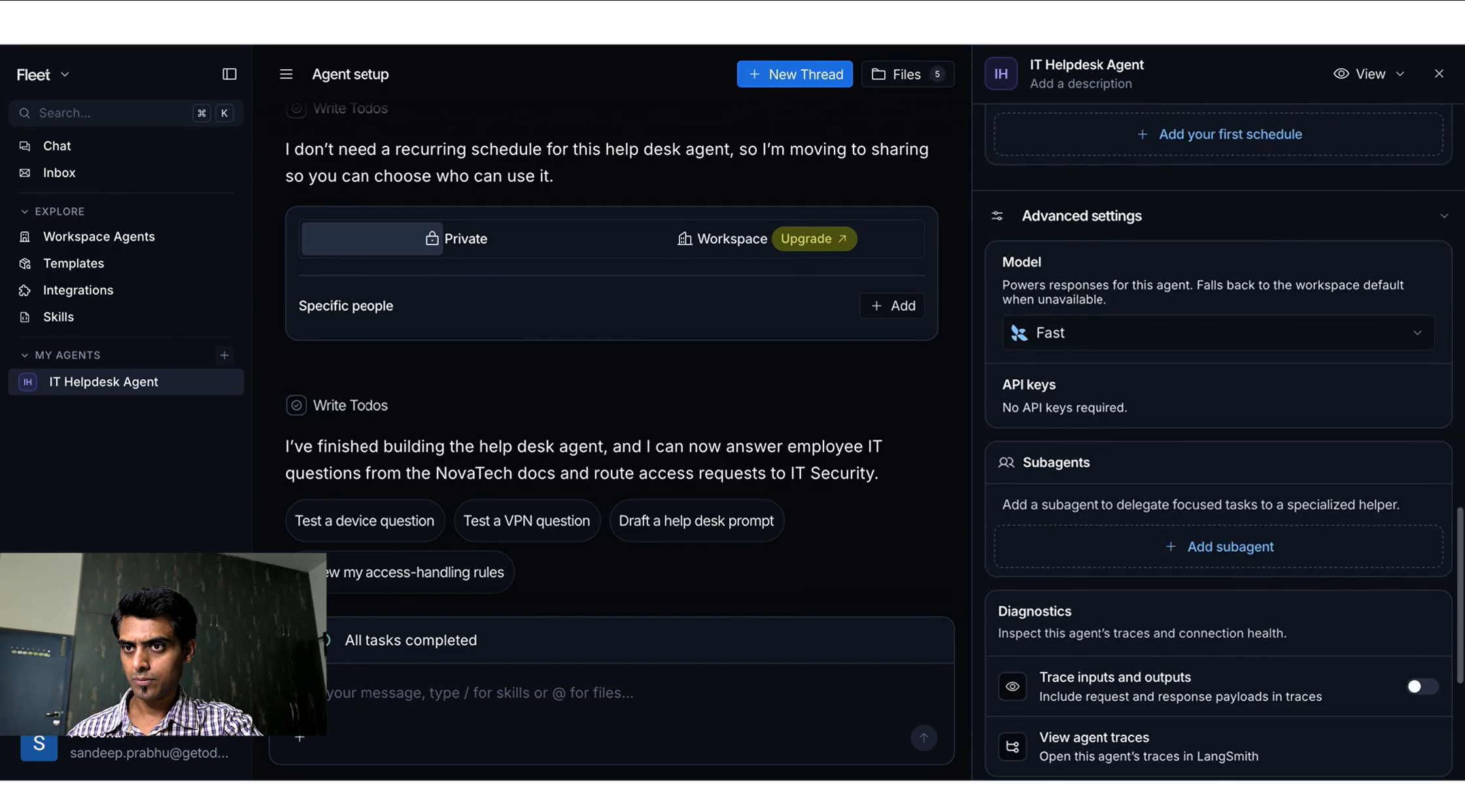
Time: 30:00 abandoned, then 18:50 on a second attempt. Verdict: fail.
LangGraph is a library, not a product with a login. Searching for a way in takes you to GitHub, because GitHub is the destination. There is no canvas.
I spent thirty minutes trying to work with it directly, gave up and came back through LangSmith, the observability and debugging layer. That eventually produced something running, but it cost another nineteen minutes and I had to re-upload the documents.
It failed all five questions and answered the Super Bowl question. That is the failure worth paying attention to. Retrieval was not constraining generation, which is invisible in a demo and extremely visible in production when an agent confidently invents a policy.
6. Stack AI
Verdict: did not finish.
The login screen loaded indefinitely and never completed, across multiple attempts including incognito. Creating a basic flow returned an unexpected error and would not proceed. The advanced workflow builder reported no templates available for the requirement.
I recorded this as a did-not-finish rather than a failure, because a platform I could not log into produces no data about the product.
7. Mastra
Verdict: did not finish.
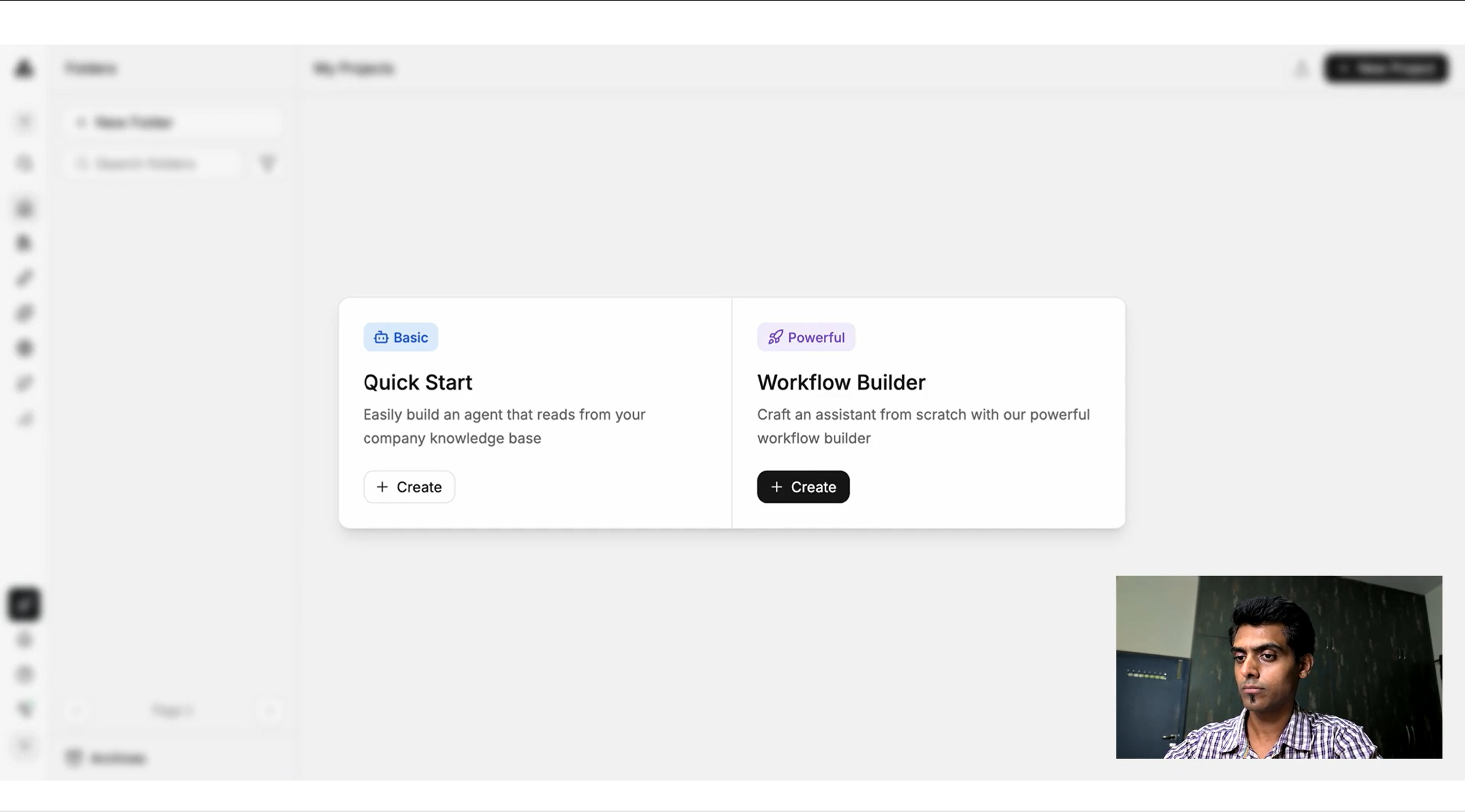
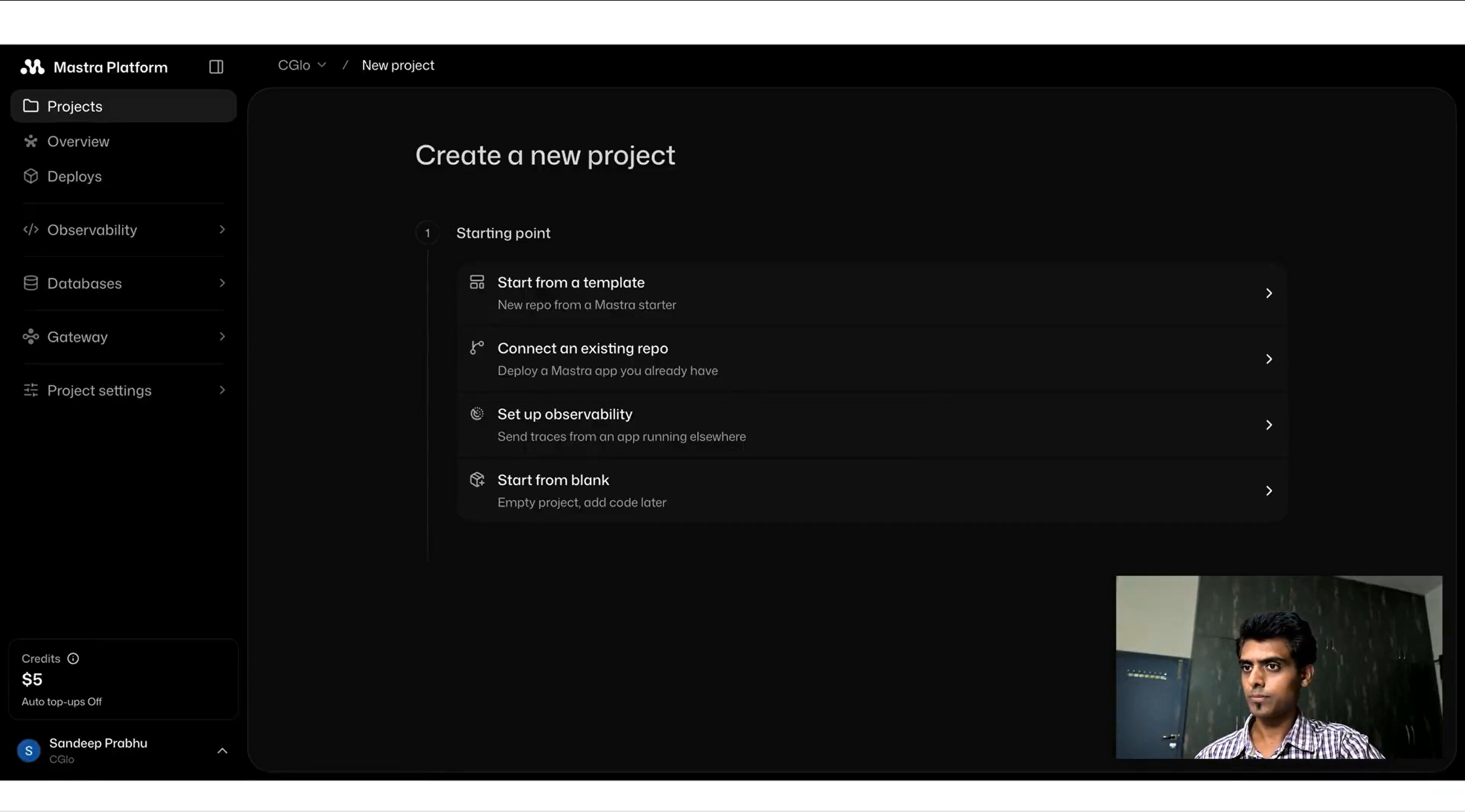
Mastra is a TypeScript framework. You scaffold a project from the command line and write the agent in code. There is no hosted builder to log into.
It does something LangGraph does not: run the local dev command and you get a playground at localhost where you can chat with the agent you just wrote. For a developer that is a genuinely good experience. For me it was still code.
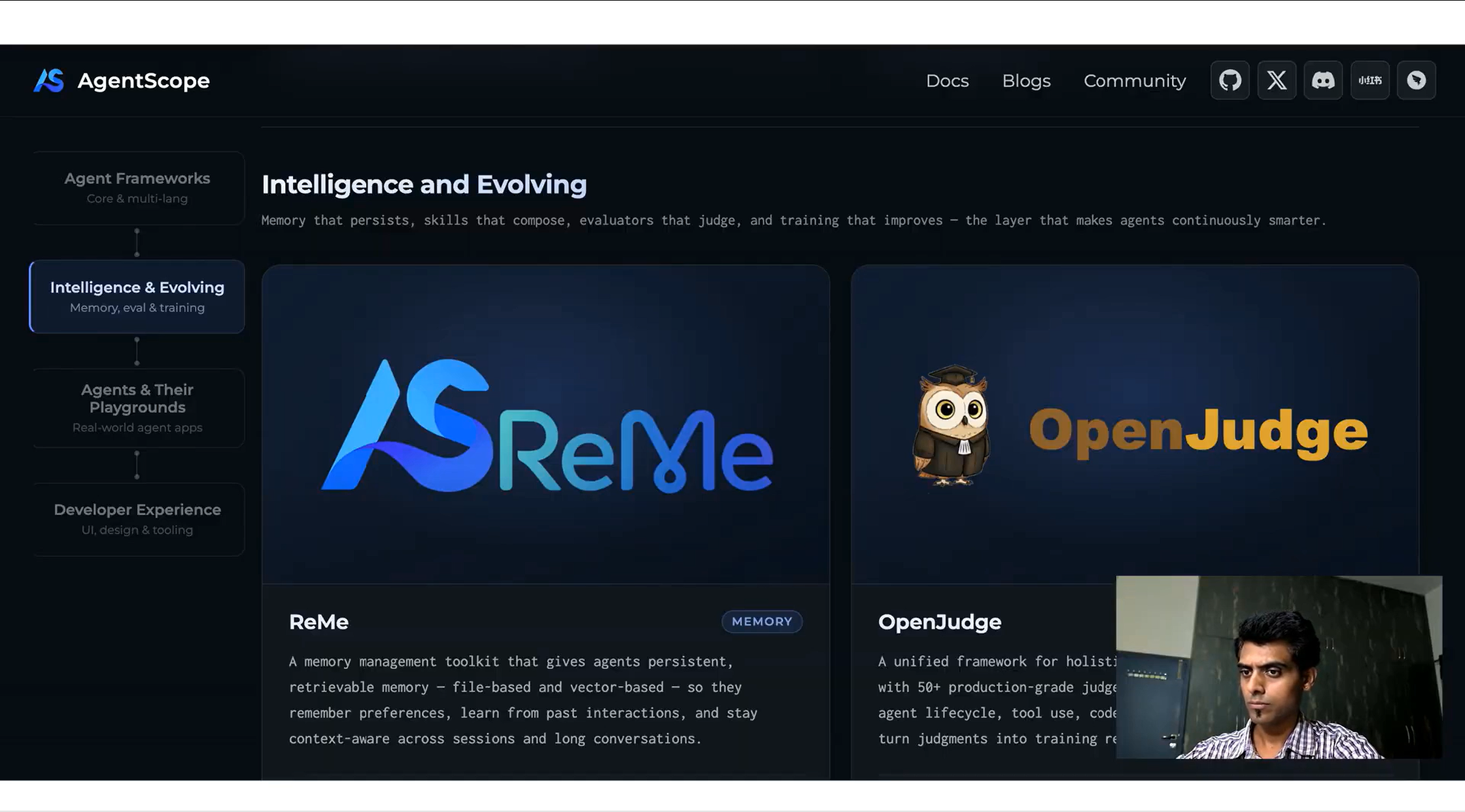
8. AgentScope
Verdict: did not finish.
AgentScope opens into GitHub. It is an open-source multi-agent framework, well regarded by the people it is built for, and there is no canvas to log into. It needs a development team.
What the Results Say About AI Agent Software
The Fastest Build Produced the Worst Agent
CrewAI finished in 8:15 and got nothing right. n8n finished in 13:14 and could not act. The two platforms that actually worked took 15:01 and 17:33.
Every platform that beat fifteen minutes failed something. Time to first agent, the metric almost every comparison leads with, ranked this field close to exactly backwards. The slower platforms spent their extra minutes connecting Slack properly, confirming permissions and checking behaviour before declaring the agent done.
Answering Is Easy, Doing Is Hard
Six of the eight could not post a Slack message. Four sets of AI agents answered questions correctly. Two completed an action against an external system.
Every modern large language model can answer questions from a set of documents, which is why demos of AI agents look impressive. The gap between an AI agent and a chatbot is whether it can execute tasks in enterprise systems. That is where this field collapsed.
One Platform Answered a Question It Should Not Have
LangGraph answered the Super Bowl question. Nothing else did.
If you are deploying AI agents into a regulated industry or any environment where a wrong answer has consequences, add a question your documents cannot answer. It costs twenty seconds and shows whether retrieval is grounding the decision or the model is falling back on its training data.
No-Code AI Agent Builder or Developer Framework?
This is the first question to answer when comparing AI agent platforms, before you look at a feature comparison, because it eliminates half the market immediately.
When You Want a No-Code AI Agent Builder
If nobody on the team writes code, you need an AI agent builder. Zapier Agents, n8n, Stack AI and Shogo fit here, along with Microsoft Copilot Studio and Make.
You get there faster and stop where the canvas stops. For a large majority of internal agents, that is the right trade. An IT help desk agent, document processing agent or onboarding assistant rarely needs custom business logic that a good agent builder cannot express.
When You Want a Framework
CrewAI, LangGraph, Mastra and AgentScope expect an engineering team. If you have engineers and the agents are going into production as real software, a framework is a genuine advantage. You get version control, tests, a repository and the ability to express complex logic that no canvas will support.
The decision is not which is better. It is whether the thing you are building will need something the canvas cannot express, because migrating later costs more than starting in the right place.
Agent Orchestration and Multi-Agent Systems
Most platforms describe themselves as supporting multi-agent systems, where several agents hand work to each other rather than one agent doing everything.
My test deliberately did not exercise any of it. One agent, one job, five questions. I would be suspicious of an evaluation that jumps straight to orchestrating multiple agents before proving that one agent can post a Slack message.
If you are building business processes that span several systems and decision points, agent orchestration matters. Test one AI agent first. Orchestration is a second problem, not a first one.
What AI Agent Platforms Cost in 2026
Pricing is difficult to compare directly because every vendor denominates in something different: per seat, per task, per credit, per execution or per resolution.
| Platform | Free plan | Paid plans start | Denominated in |
|---|---|---|---|
| n8n | Community Edition, self-hosted | €24/month cloud | Executions |
| CrewAI | 50 executions/month | Enterprise, custom | Executions |
| LangGraph | Open-source library | LangSmith usage-based | Traces |
| Mastra | Open-source framework | n/a | n/a |
| AgentScope | Open-source framework | n/a | n/a |
| Zapier Agents | Free tier | $19.99/month | Tasks and AI model tiers |
| Make | Free tier | $12/month for 10,000 credits | Credits |
| Microsoft Copilot Studio | Trial | $200/month for 25,000 credits | Credits |
| Shogo | Free tier | $20/user/month | Seats |
| Stack AI | Trial | Not published | n/a |
Three platforms cost nothing, and they were three platforms I could not finish. The price is denominated in engineering time, which does not appear on any pricing page.
What AI Agents Actually Do Once They Are Deployed
This test measures one narrow thing: can you build an AI agent that answers from documents and takes one action. A real deployment needs error handling when an integration times out, monitoring so you know when the agent stops working and a rollback path.
Most companies point first agents at repetitive tasks with high volume and low judgement: IT tickets, customer inquiries, document processing and data collection. These tasks are not glamorous, but the volume is measurable and so is the operational gain.
The best agents also know when to stop. A request for admin access to a production database should be handed to a person with the full context attached. Agent productivity is not measured only by how many tickets the agent closes. It is measured by how much work arrives at a human already sorted.
How AI Agents Differ From Existing Automation
Rule-based workflow automation is deterministic. It does the same thing every time, which is useful for invoice approvals and brittle when an input arrives in an unexpected shape.
AI agents handle the unstructured half. They read a ticket written by a human, work out what it asks and decide which path applies. The practical answer for most companies is both: deterministic rules for steps that must never vary, and AI agents for steps that currently require a person to read and judge.
A chatbot answers. An AI agent acts. Every platform in this test could answer questions from documents. Only two executed a task against an external system.
Building AI Agents for Business Growth
Start With One AI Agent
The temptation with any new AI platform is to plan a fleet of AI workflows and build agents for everything at once. Resist it. Build a single AI agent, point it at a workflow that genuinely costs money and get it working end to end, including the action.
The companies that get value from AI agents tend to have one working AI agent in production before they have a strategy document. AI agents for business succeed when the scope starts small. The ones that stall write the strategy first.
Custom Agents and Internal Tools
Once one agent works, the second is much faster because the integrations and permissions are already in place. Teams that create agents this way build momentum rather than a backlog. This is where custom agents and internal tools start to compound, and where a visual workflow builder earns its keep for non-technical teams.
Enterprise agents built this way can eventually cover multiple domains: an agent for IT, another for finance and another for onboarding. Multi-agent workflows become relevant at that point, and not before.
What Technical Teams Should Weigh
If you have engineers, the calculation is different. Frameworks give you scalable infrastructure, version control and the ability to handle complex tasks that no canvas will express. The cost is that every change routes through the engineering queue.
Several companies run both kinds of AI agents: a visual interface for the workflows business teams own, and code for the ones that need custom business logic. That split is more common than the ranked lists suggest.
Measuring Whether It Worked
Workflow automation projects fail quietly when nobody agreed what success looked like. Before you build AI agents, name the number those AI agents should move: tickets deflected, hours returned or cycle time reduced.
The measurable version of the promise to help businesses move faster is one workflow, one number and one person who owns it.
Agent Capabilities Worth Checking Before You Buy
Feature lists across AI agent platforms are close to identical. These are the capabilities that actually differ.
How the Platform Handles Sensitive Data
If you work in a regulated industry, ask where the data goes, whether documents are used to train anything and whether you can self-host. n8n Community Edition and Shogo both support self-hosting, which changes the risk management conversation substantially.
Security features on marketing pages are rarely the differentiator. Where the data physically sits usually is.
Data Integration With Existing Systems
Every platform claims broad data integration. The test that matters is whether it connects to your existing systems without an engineer. The Slack test was deliberately mundane, and six of eight platforms failed it.
Ask for a live connection to one of your real data sources during the evaluation. Not a demo environment. Yours.
Which Large Language Models It Uses
Most AI agent platforms sit on top of models from OpenAI, Anthropic or Google, with machine learning components for routing and retrieval. Natural language quality is largely inherited from whichever model is underneath.
What differs is whether you can choose the model, whether you can change it later and whether pricing shifts when you do.
How Much Autonomy You Actually Want
Vendors sell autonomous agents as the destination. In practice, most companies want the opposite at first: agents that do routine work and stop at anything consequential. The admin-access question in this test was exactly that boundary.
Decide how much autonomy the workflow justifies before you shortlist anything, because it changes which platform fits.
Whether the Artificial Intelligence Is Actually Grounded
Any platform can wire artificial intelligence to a document store. The question is whether retrieval constrains what the model generates, or whether the technology falls back on training data when your documents come up empty.
One platform in eight failed this. Test it yourself in twenty seconds.
Two Platforms I Did Not Test
I left out Make and Microsoft Copilot Studio to keep the test at eight, and both deserve a line because the results here tell you roughly what to expect from them.
Make is the closest relative to n8n: the same node-based canvas, aimed at the same non-technical teams. My expectation, stated as an expectation rather than a result, is that it hits the same Slack wall n8n hit, because that wall was Slack’s bot permission model rather than anything about the canvas. If you are choosing between Make and n8n, the deciding factor is self-hosting rather than capability.
Microsoft Copilot Studio is the procurement answer. If your IT department only approves Microsoft, you get Copilot Studio, and no comparison article changes that. It is at its best inside Microsoft 365 where the data already lives. Its entry price is often irrelevant to a company already paying for Microsoft 365, but it is worth checking the credit model before you commit.
Common Mistakes When Evaluating AI Agent Platforms
Judging the Demo
Bring your own documents to every evaluation, and bring the messy ones rather than clean vendor sample data.
Measuring Build Speed
The two fastest builds both failed. Speed is easy to measure and among the least predictive metrics when comparing AI agents.
Skipping the Action
If your evaluation stops at question and answer, these platforms look roughly equivalent. That conclusion would be wrong. Post to Slack, create a ticket or write a row, then verify the destination.
Ignoring Who Maintains It
Documents change and policies change. Ask who owns the AI agent after launch before you ask about features.
Evaluating Without a Named Workflow
Start from the workflow rather than the platform. Companies that pick a workflow first tend to deploy AI agents that matter. Companies that start from a shortlist tend to run pilots that never graduate.
Which AI Agent Platform Should You Pick?
- You have no engineers and want an agent working this afternoon: Zapier Agents. It won this test and connects to more systems than anything else on the list.
- You want the agent, integrations and a deployed interface from one platform: Shogo. It came second on the clock and returned a working app rather than a chat window.
- You need self-hosting for data residency: n8n Community Edition or Shogo. Budget time for integration work with n8n.
- You have engineers and want the repository: Mastra for TypeScript, CrewAI or LangGraph for Python, and AgentScope for multi-agent research.
- Your IT department only approves Microsoft: Copilot Studio. That is a procurement fact rather than a recommendation.
If none describes you, you probably do not need an agent platform yet. Pick the workflow that genuinely costs you money, and if you cannot name it, that is the thing to work out first.
How to Run This Test Yourself
- Write five real documents using your actual internal documentation.
- Write the brief once and paste it everywhere.
- Include a question your documents cannot answer.
- Include an action, not just questions.
- Set a time cap and honour it.
- Verify actions at the destination rather than trusting the agent’s report.
An agent that claims to have taken an action it never took is one of the most damaging failures in this whole test. It is invisible unless you check.
Frequently Asked Questions
What are the best AI agent platforms in 2026?
Zapier Agents finished fastest at 15 minutes with all five checks passed, making it the strongest option for teams with no engineering support. Shogo passed the same checks at 17 minutes and produced a deployed interface. For engineering teams, the answer depends on your language: Mastra for TypeScript, CrewAI or LangGraph for Python.
Do I need to know how to code to build AI agents?
No, but half the products marketed as AI agent platforms require it. Zapier, n8n, Stack AI, Make, Copilot Studio and Shogo are visual builders. CrewAI, LangGraph, Mastra and AgentScope are developer frameworks.
How long does it take to build an AI agent?
Between 13 and 18 minutes on the platforms that worked in this test, for one agent reading five documents and posting to one Slack channel. That is a first working version rather than a production deployment.
Why did most platforms fail to send a Slack message?
Slack requires a bot to be invited to a channel as a separate step from authenticating the integration. Platforms with a mature OAuth flow handle this invisibly. Platforms that ask for a token push that work back to you.
What is the difference between an AI agent and a chatbot?
A chatbot answers. An agent acts. Every platform in this test could answer questions from documents, but only two executed tasks against an external system.
Are open-source AI agent platforms free?
The software is free, but the cost appears as engineering time. LangGraph, Mastra, AgentScope and n8n Community Edition cost nothing to download. Zapier, Make and Shogo also offer free plans that do not require a developer.
Should I use multiple agents or one?
Start with one. Multi-agent systems matter for complex workflows, but prove that a single agent can complete one real action before adding coordination.
How do I know if an agent is making things up?
Ask it something your documents cannot answer. In this test, one platform answered a general knowledge question that appeared nowhere in the source material, showing that retrieval was not constraining generation.
Where This Test Falls Short
A second run would produce different timings, and my learning curve across eight builds means later platforms benefited from what earlier platforms taught me. I built Shogo sixth, which works against the honesty of our own result.
This is also one use case. Document processing at volume, structured and unstructured data together, or long-running autonomous agents would rank the field differently. The three did-not-finish results measure accessibility rather than product quality for engineers. Mastra and AgentScope are good tools. They are not tools for me.
Finally, I work at Shogo. The test design, questions and documents were mine, which is a real conflict. The mitigation is that the brief, documents, questions and failures are published, including our missed answer on question three. Run it yourself and tell me where you got a different result.
Try It Yourself
Shogo came second among these AI agent platforms and lost one question on the first ask. Both are in the results above.
To run the same five questions against it, start on the free plan at shogo.ai or book a demo and bring your own documents. Pricing is on the pricing page with no sales call required.
And if another platform fits you better, this article did its job.
Sources